
A small piece of theatre
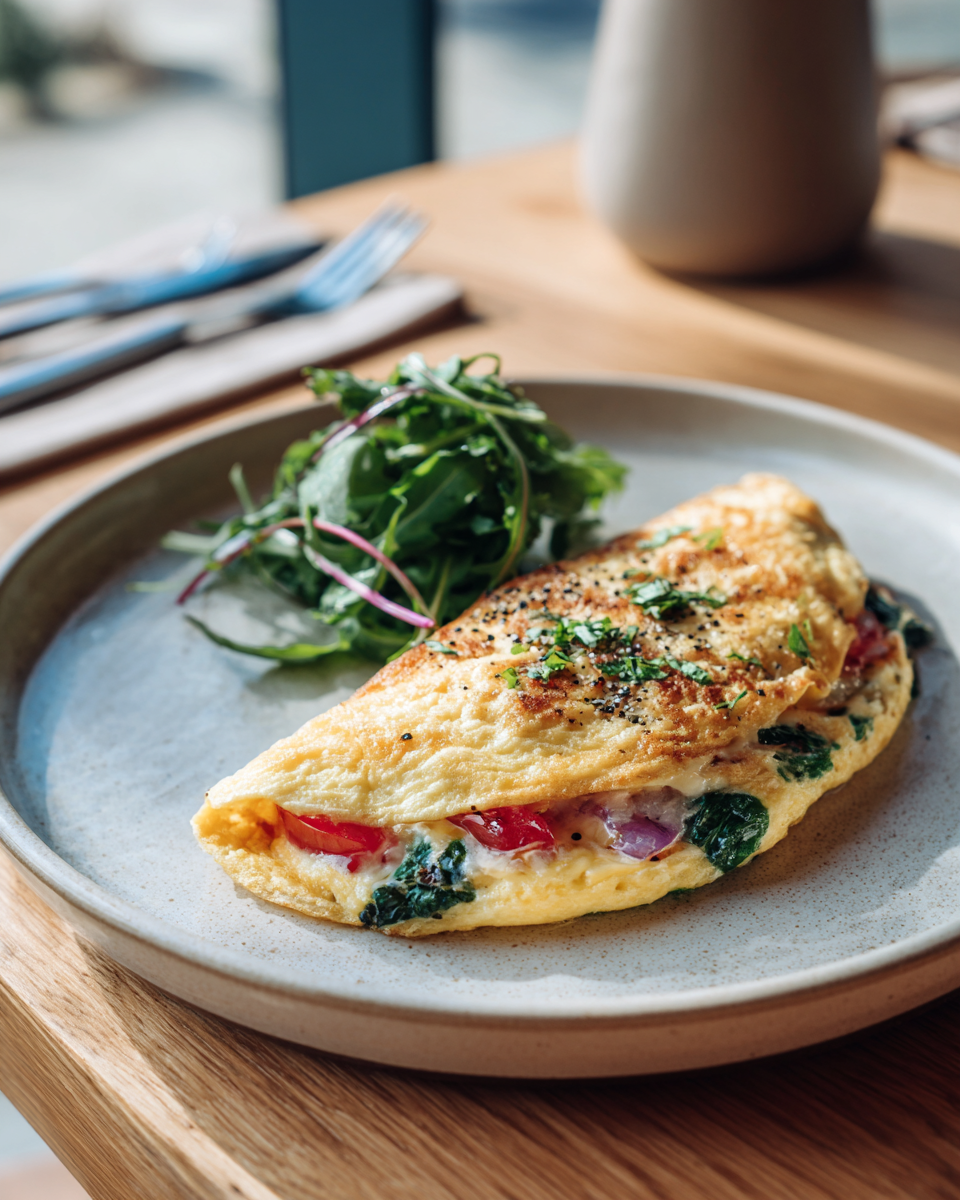
The folded omelette is one of the great cafe breakfast dishes when it is done well, and one of the less interesting ones when it is not. The difference between the two is mostly mechanical. A great folded omelette is pale yellow, puffed two to three centimetres above the rim of the pan, just set through the middle, with melted Gruyère pulling between the egg layers as the customer's fork goes in. A poor one is flat, slightly browned, with the cheese sitting in a small pool on top.
The dish has been on French menus for two hundred years and is the kind of thing chefs use to test cooks at interviews. None of the cafes producing the great version are doing anything remarkable. They are doing four small things right that the rest of the trade skips. This piece is about those four things.
The four moments where it usually fails
A flat omelette is almost always one of four things. Sometimes more than one at once, but rarely a fifth thing.
One: the mix is whisked, not blended. A whisk gets some air into the egg, but not enough. A blender on high, run for around a minute, doubles the volume of the mix and turns the colour from yellow to pale. That air, suspended in the protein, is the puff. Without the blender, the omelette has nothing to lift it. This is the single biggest difference between a great cafe omelette and a flat one.
Two: there is no lid on the pan. The lid is the second mechanical piece. The top of an omelette has to cook from above somehow, and in a cafe service that has to happen without flipping the omelette (which collapses the puff). The lid traps steam, which sets the top of the egg gently and evenly while the bottom sets on the pan. A pan without a lid produces a wet-topped omelette that has to be either flipped or run under a salamander, both of which lose the puff.
Three: the heat is too high. A folded omelette wants medium heat under the pan during the pour, then low heat once the lid goes on. High heat browns the bottom before the top has set, and at that point the kitchen is making a fried egg, not an omelette. The colour the dish is aiming for is pale yellow, the colour of butter, not the colour of toast.
Four: the mix sits too long after blending. The aerated egg mix loses its loft from the moment the blender stops. After an hour, the mix is noticeably less aerated. After four hours, it is essentially flat egg again. A cafe holding the mix in a jug all morning is making flatter omelettes by the hour. The fix is small: re-whisk vigorously before each portion to redistribute the air, and blend a fresh batch every four hours.
The method, in five steps
The omelette runs in five steps from the moment the order hits the pass. None of them takes long.
The aerated mix is poured from a jug into a hot, non-stick, twenty-two centimetre pan with a knob of butter melted across the base. The mix should foam up to the rim almost immediately. The lid goes on, the heat drops to low, and the omelette is left alone for a minute and a half to two minutes. While that is happening, a slice of sourdough goes into the toaster.
The lid comes off. The omelette is puffed and just set. Grated Gruyère and finely chopped chives go on one half. The pan tilts, the omelette folds in half over the filling, and slides onto a warm plate. The toast comes out, sits beside the omelette, and the dish goes to the pass.
That is the dish. Five steps, four minutes, one pan, one lid, one jug of pre-aerated mix held cold in the fridge. The technique is older than most cafes realise. The execution is a question of doing four small things right.
A cheap dish that sells like a premium one
Three eggs, fifteen millilitres of cream, thirty grams of Gruyère, a slice of sourdough and a pinch of chives. The food cost lands at around two and a half to three dollars a serve. On a well-judged breakfast menu the dish sells for nineteen to twenty-two dollars. The margin is exceptional and the dish reads as premium because the puff and the cheese pull are visible across the room.
It is also one of the easier dishes to scale. The aerated mix is held in a jug and portioned to order. The Gruyère is grated in advance. The bread is sliced. The technique stays the same whether the kitchen is making three omelettes a morning or thirty. And the dish is vegetarian without any caveats, which gives the menu a strong vegetarian breakfast option that does not depend on avocado or mushrooms.
One small note on the cheese, for kitchens serving strict vegetarian customers regularly. Traditional Gruyère is made with animal rennet. Vegetarian-rennet versions of Gruyère are available and are worth sourcing if the dish is going on a menu that names the vegetarian option clearly.
The omelette earns its place
A great folded omelette is one of those dishes where the customer can tell, before they have taken a bite, whether the kitchen knows what it is doing. The puff gives it away. The colour gives it away. The slow pull of the cheese as the fork goes in gives it away. None of those signs comes from a flat omelette, no matter how good the eggs were.
Get the four things right (blend the mix, use the lid, keep the heat low, blend fresh through the day) and the dish becomes one of the more reliable items on a breakfast menu. The technique is two hundred years old and has not changed. The cafes that take it seriously are giving their customers a small daily pleasure, and giving their kitchen a high-margin dish that runs through service without slowing anything else down.
Blend the morning mix at seven. Re-whisk before each portion. Pull the lid at two minutes. Fold and plate. Repeat until the lunch crowd starts asking for them.