
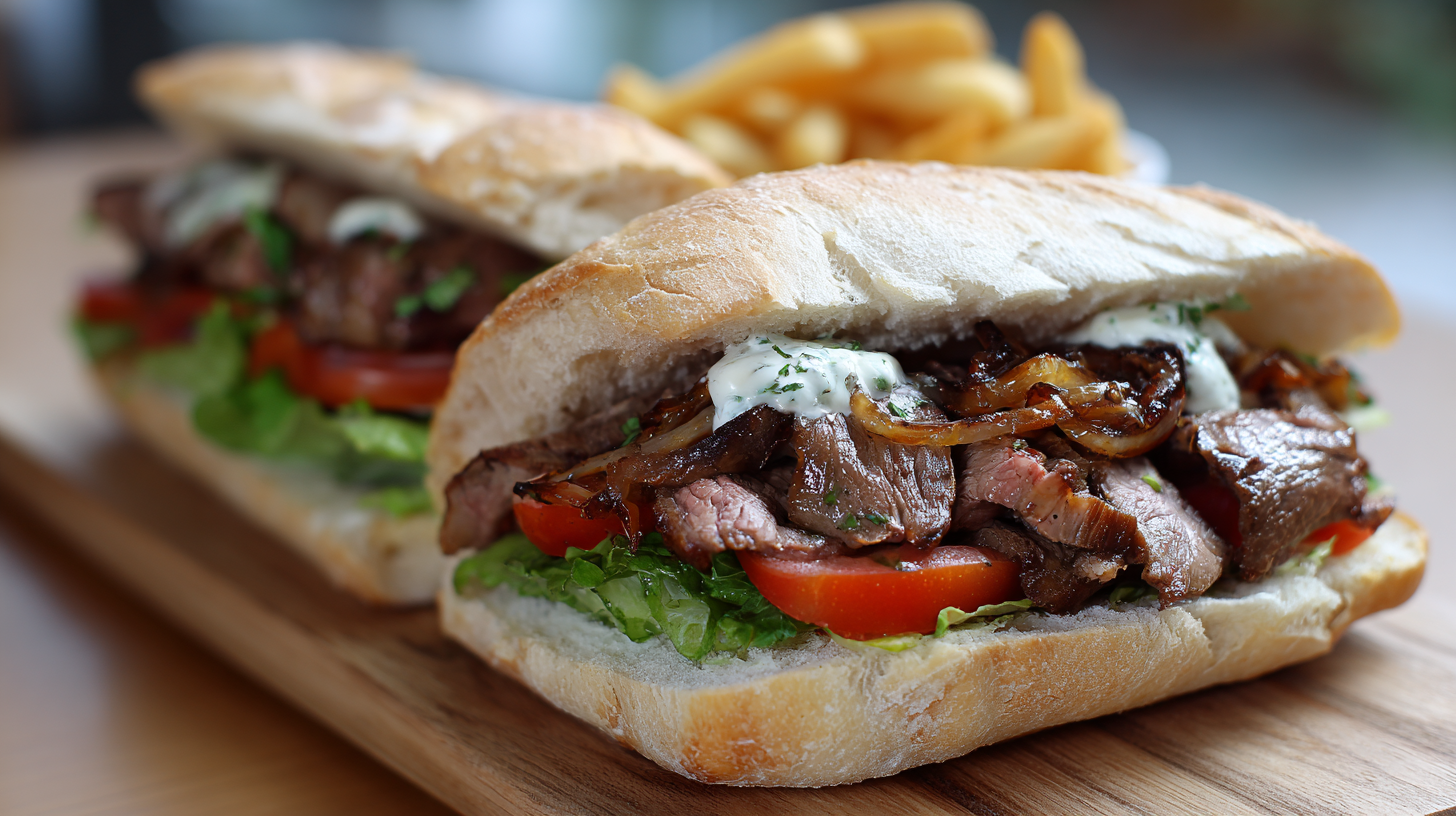
A great Australian lunch dish
The steak sandwich has a long history in Australian eating. It belongs to the country pub, the truck stop, the corner cafe with butcher's paper menus and a tomato sauce bottle on every table. It has stayed on menus for half a century because the basic idea is so good: hot bread, hot meat, something soft and sweet between them. When it is done well, it is one of the best lunches you can buy.
What has changed is what "done well" looks like. The modern cafe steak sandwich is a more considered dish than the pub version. Better bread. A compound butter where there used to be just butter. Caramelised onions cooked low and slow. Truffle mayo. Shoestring fries instead of chunky chips. The bones of the dish are unchanged. The execution is sharper.
The cook-chill technique
The reason a steak sandwich is not on more cafe menus is genuinely practical: cooking a steak from raw to medium-rare, resting and slicing takes about ten minutes. That is too long for a cafe lunch service running on six-to-eight-minute ticket times.
The kitchens that have put steak on the menu have solved this with a technique that is well known to chefs and not as well known outside professional kitchens. It is called cook-chill, and it is one of the more satisfying pieces of kitchen craft a cafe can run.
The method is straightforward. Steaks are seasoned, seared on all sides in a very hot pan, then finished in a 200 degree oven until the internal temperature hits 50 degrees, which is the medium-rare mark. The moment they come out of the oven, they go into an ice bath for five to ten minutes. The ice bath stops the carryover cooking dead, which is the secret: a steak that goes into the bath at 50 degrees stays at 50 degrees, and the medium-rare is locked in. The chilled steaks are then patted dry, labelled, and held in the cold room for service the next day.
To order, the chilled steak goes onto a hot flat-grill for one to two minutes a side. It comes back up to temperature, picks up some fresh char, and is ready to slice. Total ticket time, from order to plate, runs around three minutes. It hits the pass in the same window as a bacon and egg roll.
Done properly, the result is indistinguishable from a steak cooked to order. In side-by-side tastings, professional palates struggle to pick the difference. What changes is the kitchen's ability to serve the dish at lunch volume without slowing everything else down.
What lifts a steak sandwich
Once the technique is in place, the dish is a question of components. Four things, each of them small, decide whether a steak sandwich is good or great.
The steak. Sirloin is the working cafe choice. It carries more flavour than rump, costs less than scotch fillet, and slices beautifully into thin pink layers. Portion at 160 to 180 grams. That weight gives the sandwich a generous interior without making it impossible to eat.
The butter. This is where a great steak sandwich starts. A compound butter is the move. The classic Café de Paris is butter, dijon, lemon, paprika, garlic, parsley, capers, and a hint of anchovy. It is rolled into a log, chilled, and sliced into discs to order. Two or three discs sit on the hot steak and melt into the bread as the customer eats. It is the moment of the sandwich.
The bread. A baguette, toasted on the cut side. The baguette has the strength to hold up to the moisture of the steak and the butter, the structure to be picked up and eaten, and the contrast of crisp toast against soft meat that the dish needs. Twenty centimetres is the length that feels right. Anything shorter feels mean. Anything longer is too much bread.
The sides. Shoestring fries, salted hot off the fryer. Light enough to share the plate without dominating it, fast enough to crisp in the time the steak is reheating, easy enough to plate alongside the sandwich on a single hot dish. The shoestring also gives the customer something to pick at while they take the first bite, which is a small thing that matters more than it should.
A profitable plate, well-priced
A sirloin steak sandwich built the way described above lands at around eight to nine dollars in food cost. On a well-judged cafe menu, it sells for twenty-five to twenty-eight dollars. The food cost percentage sits in the 32 to 35 range, which is healthy by cafe standards and excellent for a premium handheld.
What is more interesting than the margin on the dish itself is what it does to the rest of the menu. A steak sandwich at the top of the lunch list anchors the price point. Customers reading the menu compare the focaccia at sixteen dollars against the steak sandwich at twenty-six and quietly decide the focaccia is the value option. The steak sandwich does not need to outsell the focaccia. It just needs to be on the menu, doing its work in the customer's head.
The dish worth bringing back
The steak sandwich is one of the most satisfying things a cafe can serve at lunch. It is the dish that makes a regular feel looked after. It is the dish that turns a Friday lunch into a small celebration. And, with the cook-chill technique handling the timing problem, it is a dish that runs through service as smoothly as anything else on the menu.
The recipe is not new. The technique is not new. What is new, in some Australian cafes, is the willingness to take both seriously and put the result on the menu. The cafes doing it well are giving their customers something to look forward to, and giving themselves a high-margin handheld that anchors the lunch list. That is worth a Sunday spent making compound butter.
Make the butter on Sunday. Cook-chill the steaks on Monday. Run the dish all week. The customers who have been waiting for it will find it.