
The cabinet changes shape with the season
A cafe cabinet has a personality, and that personality moves through the year. In autumn the cabinet leans toward apple, pear, hazelnut and dark chocolate. In winter it pulls toward warming spice, ginger, citrus and rich brown butter. In spring the colour palette opens up, with rhubarb, strawberry, lemon and the first stone fruits. By summer the cabinet should look like a small version of the produce season, bright and generous and slightly informal.
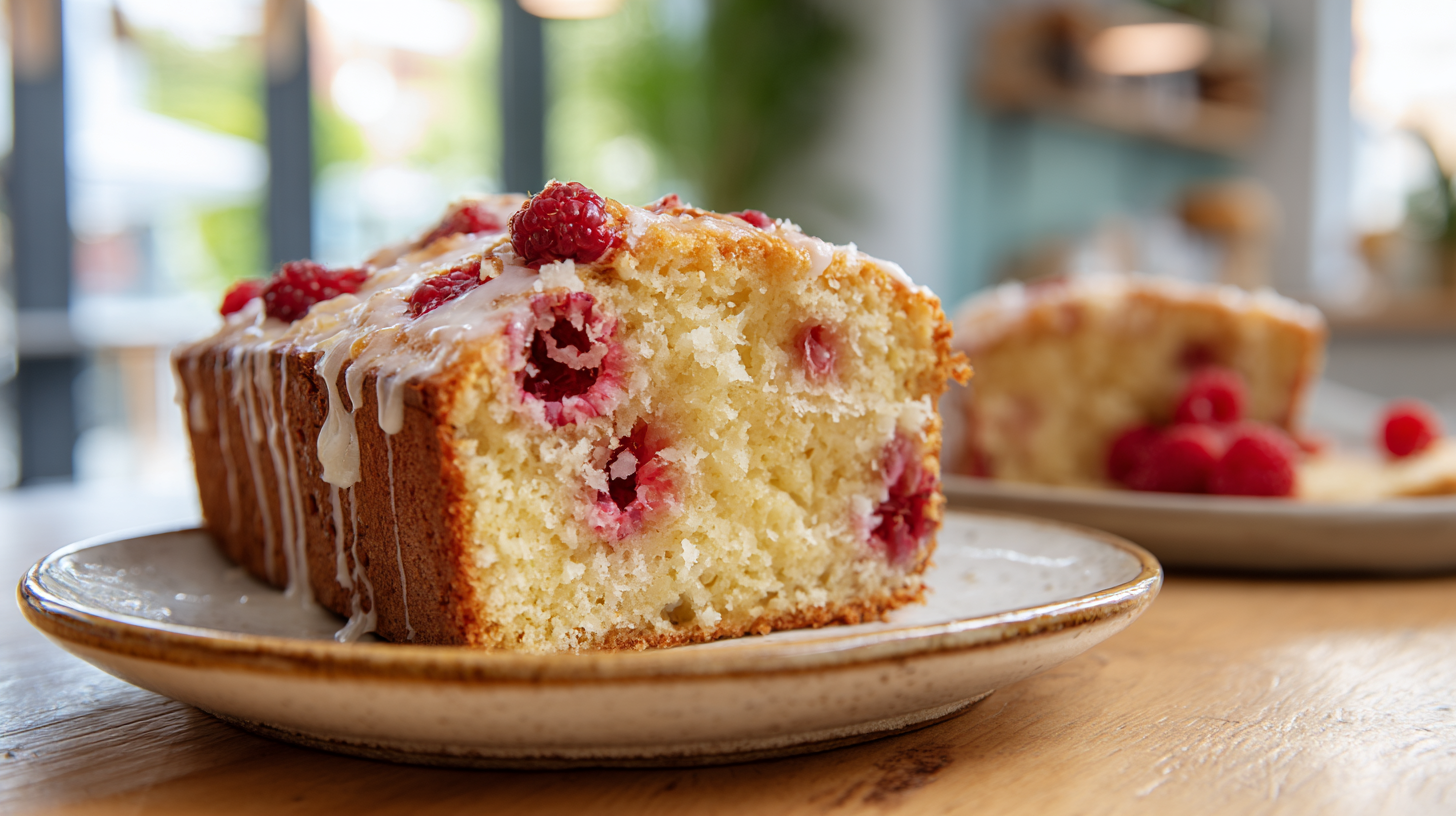
For the Australian late-spring and summer, a coconut and raspberry loaf with a glossy lime glaze is one of the better choices for the cake stand. It carries the season on the plate (raspberries are at their peak from October through February), it is photogenic without trying, and the buttermilk crumb gives it a tender texture that holds up to a busy weekend service. It also runs year-round, with one small change of technique, which makes it a useful cabinet anchor rather than a seasonal special.
The crumb and the glaze
The loaf is a butter cake at heart, with two small additions that lift it above the standard. Coconut, in the form of desiccated coconut folded into the dry mix, gives the crumb a subtle sweetness and a textural lift. Buttermilk, mixed in with the wet ingredients, gives the loaf its tender crumb. The fresh raspberries fold through last, just before the batter goes into the tin, to keep them whole and their colour in distinct points through the slice.
The method is the standard creaming technique, which any cafe baker will know. Butter, caster sugar and lime zest creamed together until pale and fluffy. Eggs added one at a time. Vanilla extract through. Half the dry ingredients folded in, then the buttermilk, then the rest of the dry ingredients, all mixed gently until just combined. Raspberries folded through last with a light hand. Batter into a 22 by 12 centimetre loaf tin lined with baking paper, surface smoothed, and into a 160 degree fan-forced oven for fifty to sixty minutes until a skewer comes out clean.
The glaze is the part most home recipes get wrong, and the part the cafe version has to get right. Fresh lime juice (around 30ml from one lime) goes into a small saucepan with around 100g of icing sugar. Heat gently and stir until the sugar dissolves into a smooth, pourable glaze. While the loaf is still hot from the oven, poke holes across the top surface with a skewer, pour the hot glaze evenly over the loaf, and use a pastry brush to spread the glaze into the holes and across the surface. The hot-on-hot pour is what gives the loaf its glossy finish and the moisture that travels down through the crumb.
Frozen raspberries, used the right way
Raspberries are at their peak from October to February in Australia, and at that time of year the dish should be made with fresh berries from a quality supplier. Outside that window, the price of fresh raspberries doubles, the quality drops, and the loaf stops being economic to make. This is where the dish becomes interesting, because the same loaf works year-round with frozen raspberries, with one change of technique.
The change is to fold the raspberries through the batter while they are still frozen. Do not thaw them. Frozen raspberries hold their shape through the bake and bleed less colour into the surrounding crumb, which keeps the slice clean and the visual sharp. Thawed raspberries collapse into the batter and turn the whole loaf a uniform pink, which is not the look the dish is going for. The bake takes two or three minutes longer to compensate for the cold raspberries, but the result is almost indistinguishable from the fresh-berry version.
That single technique change is what turns the loaf from a seasonal special into a year-round cabinet item. In summer it carries the season. In winter it brings a small piece of summer into the cabinet at a moment when the rest of the cake stand is heavier and warmer. Both versions sell, and the kitchen runs the same recipe both ways.
Bake on Sunday, run all week
The loaf is built for a steady cabinet rhythm. A single bake produces ten generous slices, around 130g a slice (loaf base plus glaze). The slices hold three days refrigerated in a sealed container with baking paper between layers, with peak texture in the first forty-eight hours. Out on the cabinet, the slice is at its best for around four hours of cool ambient, with up to six hours acceptable before the glaze starts to dull noticeably.
Slices also freeze well, and this is where the dish gets interesting for a smaller cafe with unpredictable weekend trade. Freeze the slices unglazed for up to two months in a sealed container, with baking paper between if stacking. Thaw overnight in the fridge, then glaze fresh per the original method just before service. The glazed slice from a thawed-and-fresh-glazed base is indistinguishable from a slice cut on the day of bake, which is a useful trick when a cafe wants to bake in batch but serve fresh-glazed quality every day.
For warm-service hours, a slice will go from cabinet to plate in around thirty seconds in a salamander or thirty in a 160 degree oven, which gives the slice a warm-from-oven feel for the afternoon coffee crowd. It is a small touch and it makes the slice eat as if it has just come off the cooling rack, which is the kind of small lift that turns a customer into a regular.
The cabinet cake the warm months want
Cabinet decisions are mostly small ones, made one slice at a time over a year, and the cake stand pays back the kitchens that take its rhythm seriously. A coconut and raspberry loaf with a sharp lime glaze is one of the cleaner moves for the warm months: photogenic, generous, technique-friendly and with a freezer path that keeps it on the menu when the fresh raspberries leave the market.
Bake on Sunday. Glaze hot. Slice ten generous portions. Hold for two days at peak. Run the cabinet rhythm. The customers who walk past the cake stand on a warm afternoon will see the slice and order it without thinking, which is the highest compliment a cafe cake can earn.
The cabinet rewards the cakes that look like the season. For most of the Australian year, this is one of them.