
Five percent chia by oat weight
Chia seeds in overnight oats are the difference between a thick, spoonable dish and a soupy bowl of soaked grain. The chia absorbs liquid (roughly 10 times its weight) and forms a gel that binds the oat mixture. At the right ratio, this is what gives overnight oats their signature creamy thickness.
The right ratio is around 5 percent chia by weight relative to the oats. So 25 grams of chia for 500 grams of oats. At that ratio the dish thickens nicely overnight and has a pleasant body in the mouth.
Push the chia to 8 or 10 percent and the dish goes gluey. The gel becomes the dominant texture. The oats disappear into a uniformly dense paste. Customers describe the result with words like "heavy" or "weird in the mouth," and they leave half the bowl on the plate.
The fix is mechanical: weigh the chia. Do not eyeball it. The visual difference between 25 grams and 40 grams of chia in a tub is barely noticeable. The textural difference in the finished dish is the difference between a dish customers come back for and one they do not.
Whisk thoroughly, then whisk again
Chia seeds, once they hit liquid, start absorbing immediately. If they go into the mix in a clump, they form a single gel mass instead of distributing evenly through the oats. The result is dense gel pockets in some bites, soupy oats in others, and a customer who notices the inconsistency without being able to explain it.
The fix is to whisk the dry ingredients (oats and chia) thoroughly before adding any liquid, then whisk again vigorously after the liquid goes in. The whisking takes 30 seconds and is the single most reliable predictor of whether the finished dish will be uniformly textured.
Three days is the working maximum
The phrase "overnight oats" is literal. The dish is at its best 8 to 24 hours after mixing. By 48 hours, the oats have started to break down further and the texture has shifted. By 72 hours, the dish is past its best and customers will start describing it as pasty or stale.
The cafe workflow that fits this is to make a fresh batch every two to three days. Sunday for Monday to Wednesday, Wednesday for Thursday to Saturday. Loosen the older batch with a splash of fresh milk before plating to bring back the texture.
A single batch stretched to five days is technically the same dish on day five as on day one, but no longer the dish the customer ordered. Two-to-three day rotation is the move.
If a cafe is serving overnight oats from cabinet display rather than to-order plating, the rotation matters even more. A bowl that has been on display for 6 hours dries out at the surface and forms a film. Cover with cling film or a lid until the moment of service to keep the texture honest.
The base is honest, the toppings make the dish
A bowl of plain overnight oats is competent. A bowl of plain overnight oats with thoughtful toppings is a dish customers will pay $15 to $18 for. The toppings are not a garnish. They are what differentiates one cafe's overnight oats from another's, and they are where the dish either lifts or falls flat.
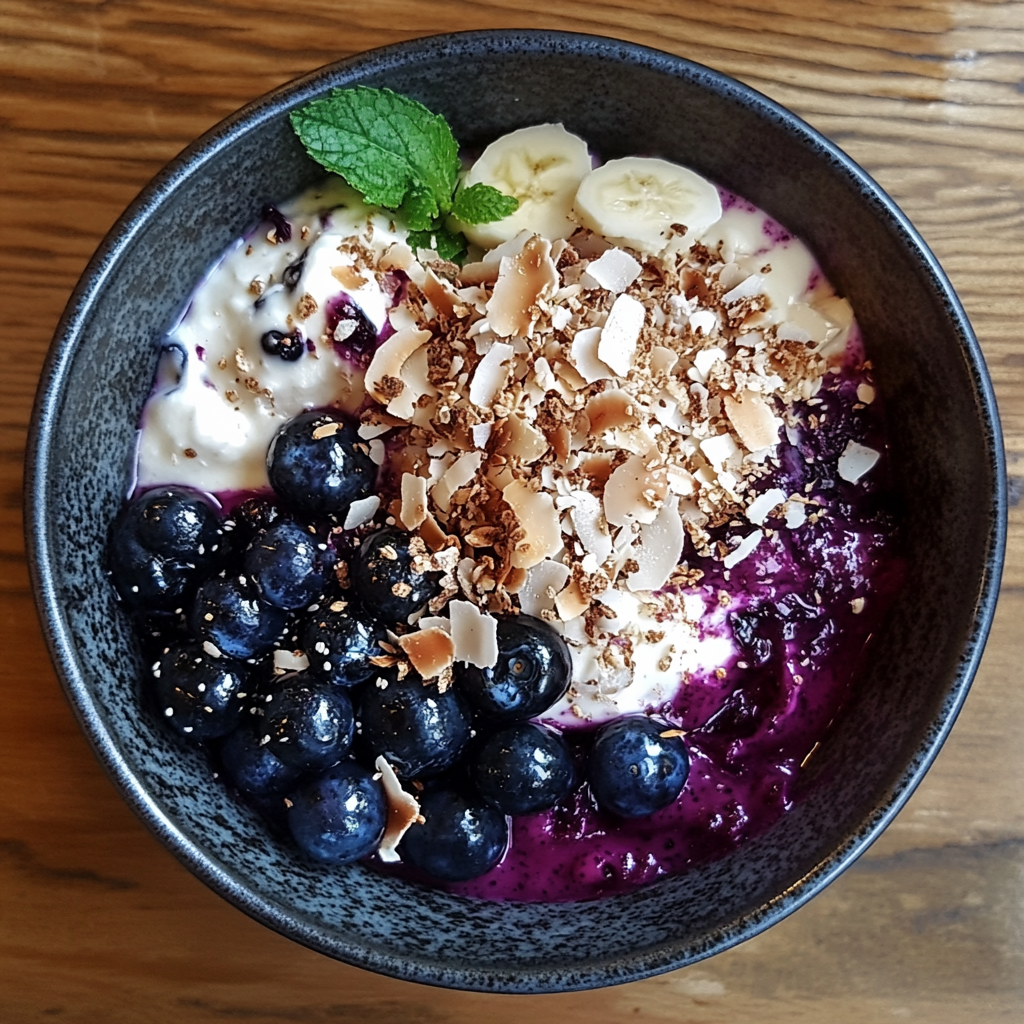
The working principle is one fresh element, one crunchy element, one sweet element. Fresh blueberries (one fresh). A scatter of toasted coconut or granola (one crunchy). A drizzle of maple syrup or a spoon of nut butter (one sweet). That gives the dish texture variation, visual contrast, and flavour layers that the oat base on its own cannot provide.
Two things tend to pull the toppings off-balance. Skipping them altogether ("the customer can sweeten if they want") leaves the dish flat. Overdoing them (six toppings on a small bowl) reads as cluttered. Three is the right number.
What overnight oats worth ordering look like
Weighed correctly: 5 percent chia by oat weight, two parts liquid to one part oats. Whisked thoroughly at the start. Refrigerated overnight, used within three days, loosened with fresh milk if it has set too thick. Plated to order with three toppings: one fresh, one crunchy, one sweet.
That dish is healthy, creamy, visually generous, and runs at 15 to 20 percent food cost. It is one of the highest-margin breakfast items on a cafe menu and one of the easiest to execute consistently. The four small things above are the difference between a competent bowl and one customers come back for. The dish rewards the kitchens that take it seriously.