
The Anzac biscuit was designed to last
Anzac biscuits were originally baked to be sent in care packages to Australian and New Zealand soldiers in World War I. The recipe used no eggs (which would not survive the trip) and relied on golden syrup, butter, and brown sugar for binding and flavour. The biscuits had to last weeks at sea, then weeks again on the front. So the original Anzac biscuit was hard. Hard was the point. Hard meant it survived.
The cafe Anzac biscuit is not that biscuit. The cafe Anzac biscuit is for eating with a coffee in front of the customer, not posting to Gallipoli. So the cafe version should be chewy, fresh, and golden. That is the version that performs at cabinet sale.
Knowing the history matters because it explains why the recipe contains so few ingredients and no leavening except bicarbonate of soda. Every component is doing structural work in addition to flavour work. There are no spare parts.
The bicarb moment is the whole game
Here is the step in the recipe that decides the texture of the finished biscuit.
Butter and golden syrup are melted gently in a saucepan until smooth (do not boil). Bicarbonate of soda is dissolved separately in 30ml of boiling water (the mixture will fizz vigorously). The foaming bicarb water is poured immediately into the melted butter and syrup. The whole thing froths up.
That foam is the lift in the biscuit. It is the only leavening the recipe has. If the bicarb water is added cold instead of foaming, the lift never happens. If the foamed mixture sits on the bench for a minute before being mixed into the dry ingredients, the lift dies. The window from foaming to mixing is roughly 15 seconds.
The kitchens that nail this work fast at this step. Dry ingredients weighed and ready in a large bowl. Wet ingredients warming. Bicarb water boiled and stood by. The moment the bicarb hits the syrup mixture, the cook stirs immediately and pours the foaming liquid straight into the dry ingredients. Everything is set up so the 15-second window is never the problem.
Twelve minutes is chewy, fifteen is crisp
The other decision that matters is the bake time. The recipe is the same. The timer decides the texture.
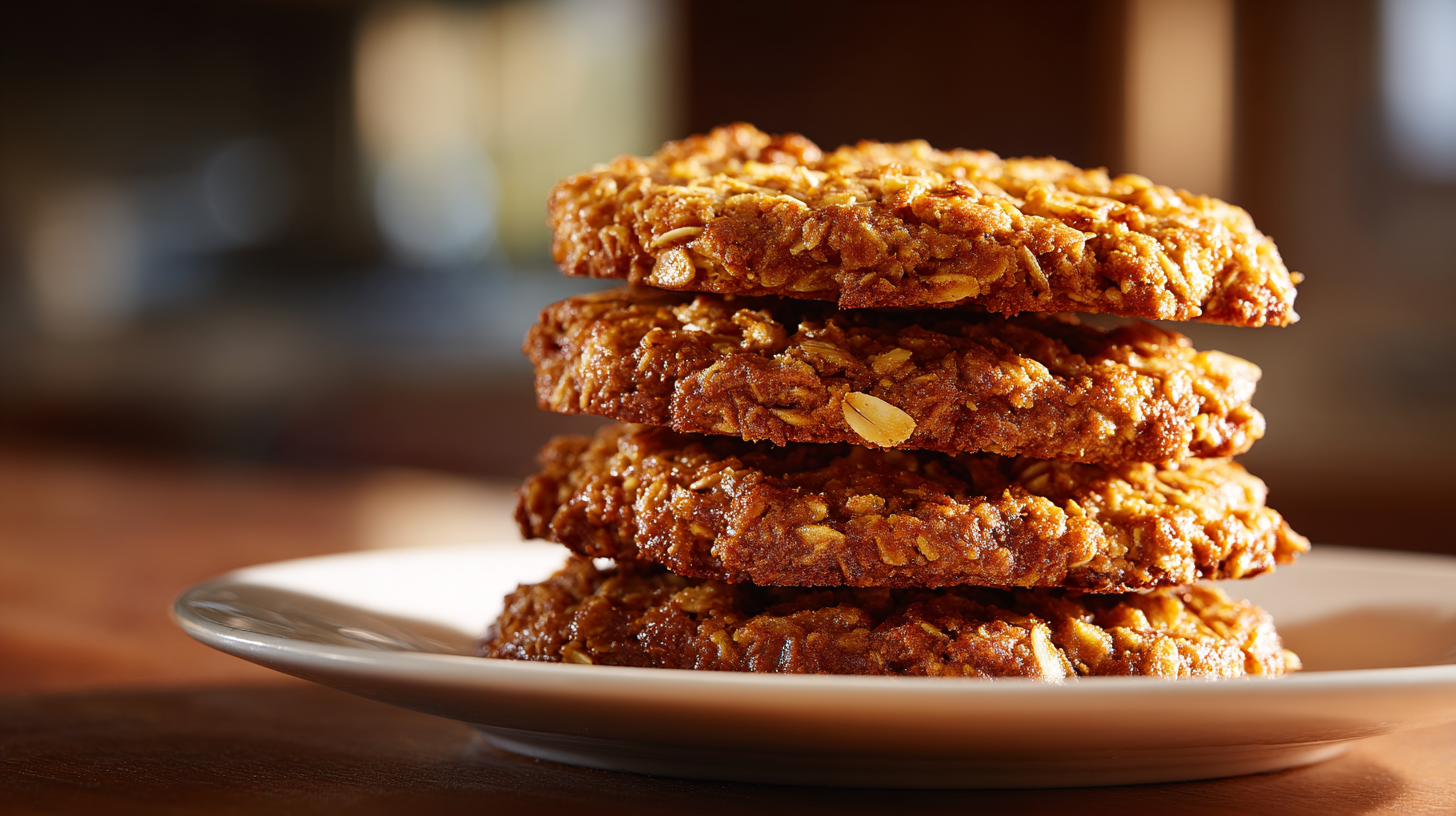
At 160 degrees fan-forced for 12 minutes, the biscuit comes out deep golden at the edges, slightly soft in the centre, and firms up on the tray to a chewy, slightly soft texture. This is the cafe cabinet biscuit. Customers love it.
At 15 minutes, the biscuit is fully crisp through. Snaps cleanly when broken. Holds longer. This is the gift-tin biscuit, the one that travels.
Eighteen minutes is overbaked. The biscuit becomes hard rather than crisp, and the golden syrup caramel notes turn bitter. The biscuit looks underdone at twelve and the temptation is to leave it in. The trick is to trust the look and pull it out anyway.
The biscuits firm up dramatically on the tray as they cool. A biscuit that looks slightly underdone coming out of the oven will be perfect once cool. A biscuit that looks fully done coming out of the oven will be hard once cool. Trust the underdone look.
Tablespoon-sized balls, flattened slightly
The yield matters for cafe consistency. The recipe portions into 24 tablespoon-sized balls (around 32 grams each) per batch, placed five centimetres apart on lined trays (Anzacs spread significantly), and gently flattened with the back of a spoon to about 1 centimetre thick before baking. The result is a uniform 24 biscuits per batch, each around 28 grams baked, which is the right size for a single cabinet serve at $4 to $5.
Eyeballing the portion is tempting, and it is the second thing that pulls Anzac biscuits out of consistency from batch to batch. Some come out too big and underbake at the recommended time. Some come out too small and overbake. A simple 32-gram portion scoop or a tablespoon measure fixes this in one go.
Get the bicarb moment right and the rest follows
The Anzac biscuit is one of the simplest items a cafe will ever make. The whole quality of the finished biscuit comes down to a single 15-second window where foaming bicarb water hits a hot syrup mixture and lifts the entire dough.
Get that moment right, weigh the portions, and pull the trays out at twelve minutes. The result is the Anzac biscuit customers remember from their grandmother's kitchen, the one that disappears off the cabinet by Tuesday.
It is one biscuit, one foam, one timer. Hold those three things consistently and the cabinet sells through itself.