
Cabinet space is the most expensive real estate in a cafe
A cabinet runs from one end of the front counter to the other, and every tray on it is paying rent. The good cafes know exactly what each tray earns per day. The great cafes know what each tray earns per square centimetre per hour. Cabinet economics is not glamorous but it is one of the few places in a cafe where small decisions compound directly into the bottom line over a year.
The dishes that survive on the cabinet line are the ones that meet four tests. They batch cleanly without long sub-recipe chains. They hold their quality through a full service without visible decline. They look beautiful under glass at a distance of three metres. And they sell on a small footprint at a high enough margin that the tray pays for itself before lunch. The classic lemon tartlet, made well, ticks all four.
The curd is the dish
The shell is the architecture but the curd is the dish. A great lemon tartlet is built on a curd that is sharp, glossy, smooth and just set, with a slight wobble in the centre when the tartlet is cut. A poor curd is grainy, dull, too sweet, or set hard. The difference is one number on a thermometer.
The method is steady and unfussy. Whisk caster sugar and whole eggs together in a saucepan off the heat. Add fresh lemon juice (around 180ml from two ripe lemons), the zest of those same lemons, and a small amount of cream for richness. Place the saucepan over a low to medium heat and stir constantly with a heat-resistant whisk. The mix thickens slowly. The target is to hold the curd between 75 and 80 degrees, just below the temperature at which the eggs would coagulate, for around eight to ten minutes until the curd coats the back of a spoon.
The moment the curd is off the heat, butter goes in and is whisked through. The whole batch then passes through a fine sieve, which removes any small lumps and gives the curd its glassy finish. Warm curd goes straight into the pre-baked shells, around fifty grams to a shell, and the tartlets bake for ten to twelve minutes at 160 degrees fan-forced to set the curd to a wobble. Cool to room temperature, refrigerate for at least two hours to set fully, and the dish is ready for the cabinet.
Two notes on the bake. The shells are already blind-baked when they go into the oven, so this stage is a curd-set, not a pastry-bake. And the oven is best preheated at the start of the curd-finish step, not the start of the recipe, so it comes up to temperature exactly when the curd is ready to pour. Fifteen minutes of empty oven time is fifteen minutes of energy a cafe does not need to pay for.
The four tests, run on a tartlet
It batches cleanly. Twelve tartlets come out of one batch of curd cooked in twenty minutes of active work, plus a two-hour chill that runs unattended in the cold room. There are no sub-recipes, no fermentation steps, no tempering chocolate. A first-year cook can produce a tray on a Tuesday morning and have it ready for the lunch cabinet.
It holds for two days refrigerated. Tartlets made on Sunday evening sell through Monday and Tuesday without quality loss. The four-hour cool-ambient cabinet window means the tray rotates from cold room to cabinet in two cycles a day, and the kitchen knows exactly when the next bake is needed. There is no guessing.
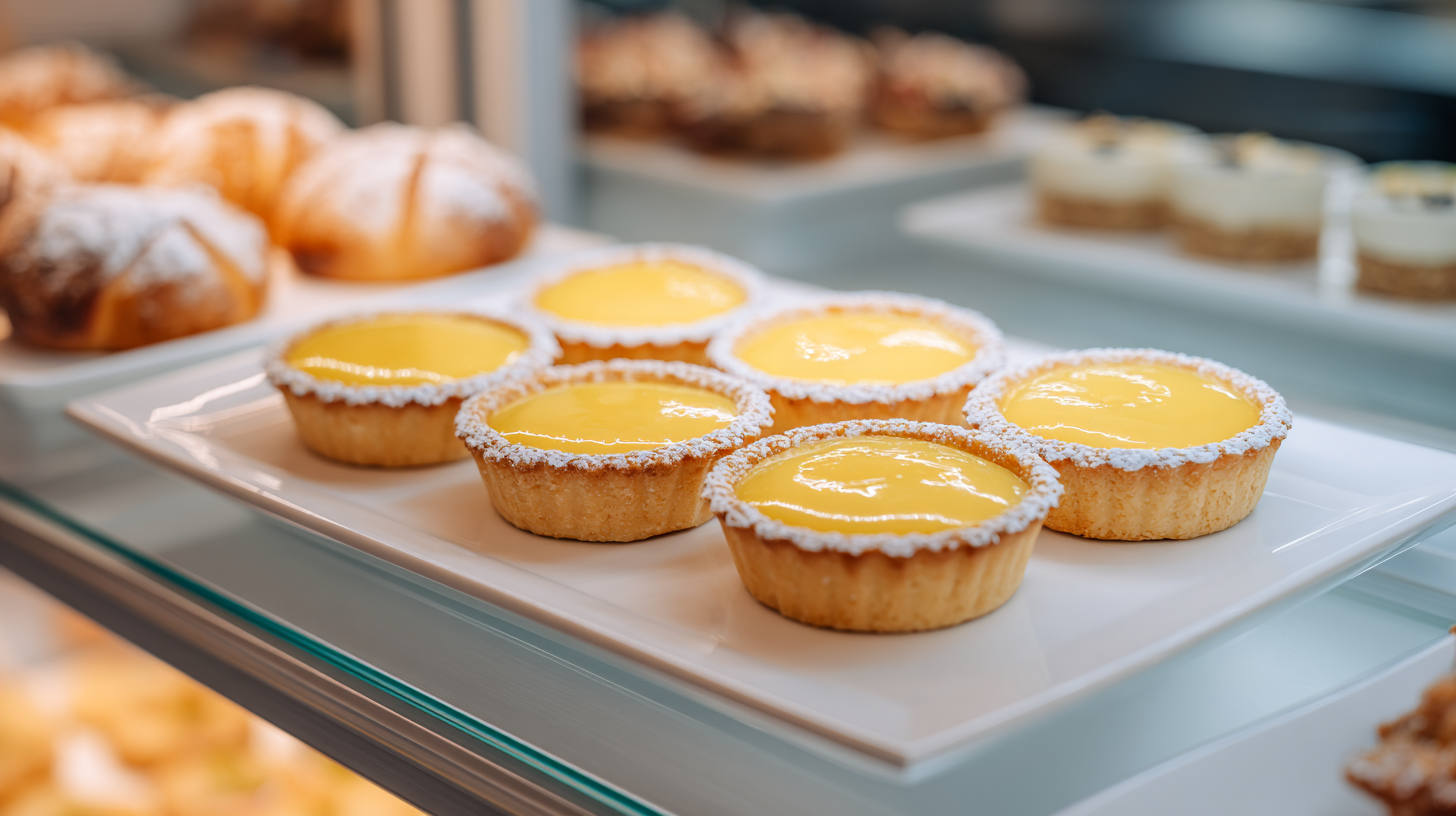
It looks beautiful under glass. The bright yellow curd against the pale shell is one of the most photogenic combinations a cabinet can run. A light dust of icing sugar to order is all the finishing the dish needs. Twelve tartlets in a row on a tray reads as quality at first glance, before the customer has even read the label.
It sells on a small footprint. A single tartlet occupies around eight square centimetres of tray space. A row of twelve fits across a standard cabinet tray. At eight to ten dollars retail, the dish carries a food cost of around two and a half dollars (mostly the shell and the cream). Margin per tartlet sits between 65 and 75 percent. Two trays a day, sold through, is meaningful additional revenue from a piece of equipment that was already running.
What a small sweet earns beyond its own tray
The tartlet does its own job in its own corner of the cabinet, but it also does work for the wider menu. A cabinet with a tray of bright yellow lemon tartlets in it reads as a more considered cabinet, full stop. The customer scanning the line for an afternoon coffee picks up the signal that the kitchen takes its sweets seriously, and that signal carries over to the larger sweets, the slices, and the savoury options sitting beside it.
A clean small-format dessert also gives the cafe an upsell at the till. The customer ordering a long black at three in the afternoon is one quiet question (would you like a tartlet with that?) away from a four-dollar add-on at no marginal cost to the kitchen. Across a busy afternoon service, that single question is the kind of quiet revenue gain that makes a meaningful difference to the weekly take.
A small dish that earns its tray
Most of what makes a cabinet work happens at the small end of the menu. Big dishes are decided by the chef and the pass. Small dishes are decided by the cabinet, the till, and the customer's eye line at the moment they are paying. The lemon tartlet is one of the cleanest examples of a small dish that earns its place: tight batch, clean curd, two-day hold, beautiful under glass, strong margin, and a generous sell at the till.
Make the curd on a Sunday. Bake the shells the same evening. Hold them through Monday. Rebake on Wednesday. Run the cabinet rhythm and the tartlet pays its rent in the cabinet, every week, without much fuss.
Cabinet space goes to the dishes that earn it. A well-made lemon tartlet earns it twice over.