
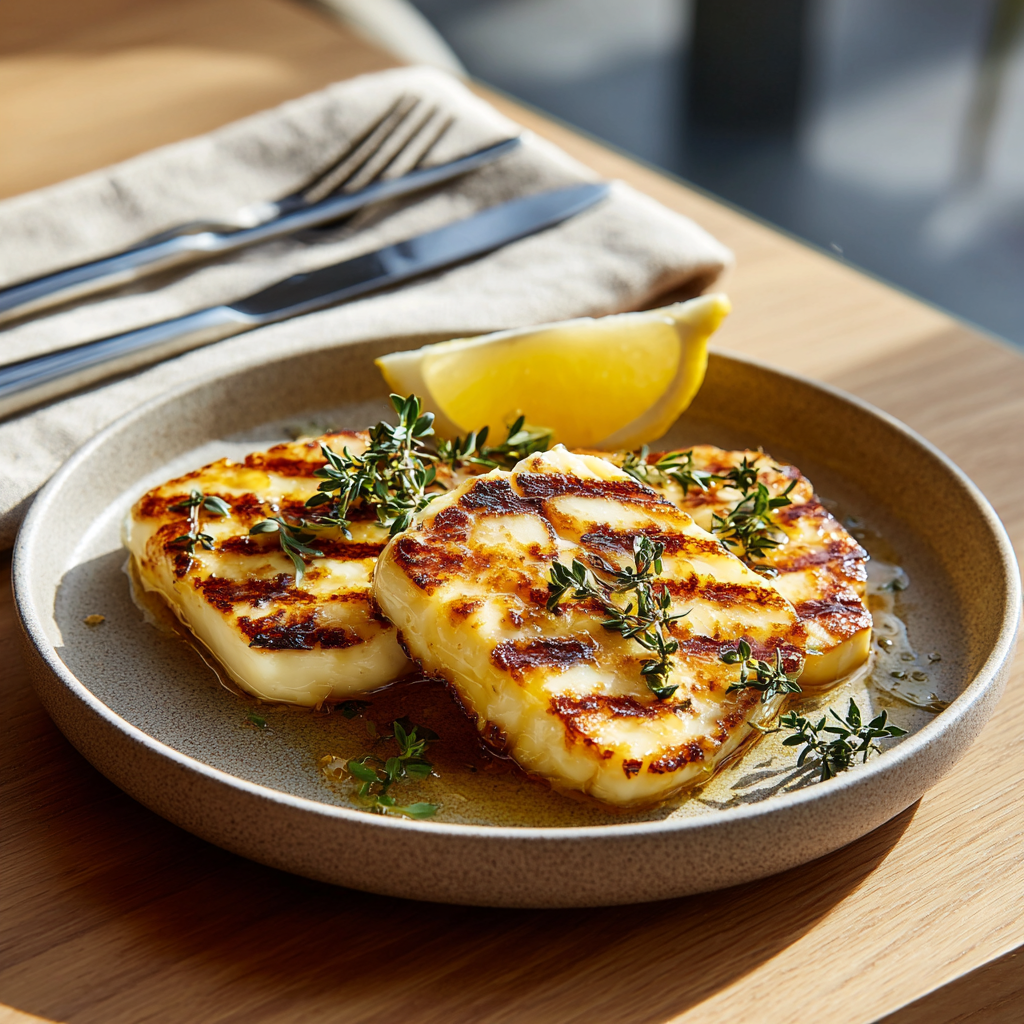
Yes, halloumi should squeak
The squeak is the whole point. When a piece of halloumi presses against your teeth and gives that clean, almost rubbery resistance with the high-pitched signal, it means three things at once. The cheese is fresh. It has been cooked correctly. It has reached the table while it still has heat in it. That sound is the cheese telling you the kitchen got it right.
A halloumi that does not squeak has lost the dish. It is either past its window, overcooked into rubber, or held too long on a warm pass. The squeak is one of the few sensory signals in cooking that gives a clean yes or no, hero or regret. Every cafe putting halloumi on the menu should be cooking towards that signal.
What makes halloumi squeak
Halloumi is an unusual cheese. It is not aged, and the milk proteins inside it form long, tightly bound strands that survive heat without breaking down. When you bite a hot piece, those strands rub against tooth enamel at a frequency you can hear. Most cheeses melt or soften before they get the chance. Halloumi, with its high melting point, does not.
The science is simple. The cooking matters. A short, hot cook tightens the surface, builds the golden crust, and leaves the inside structure intact. A long, low cook breaks the proteins down and silences the squeak. Get the heat right and the squeak comes through.
Buy the right cheese
The first thing that decides whether your halloumi squeaks is what you bought. Real halloumi is brined, semi-hard, made from a mix of sheep, goat, and sometimes cow milk, and sold in vacuum packs sitting in their own salty liquid. Cypriot halloumi is the original, and the imported blocks are excellent. Australian-made halloumi has come a long way, and several producers now turn out cheese that performs as well as the imported product on a cafe pass.
What you do not want is anything labelled halloumi-style or grilling cheese. These are not the same product. They are usually built on a different protein structure, do not hold their shape under heat the same way, and do not squeak. They are cheaper, and the cost shows on the plate. Pay the extra and buy the real thing.
Slice thick, pan hot, ninety seconds a side
The slice is eight to ten millimetres. Thinner than that and the cheese dries out and goes leathery before the surface caramelises. Thicker and the centre stays cold while the outside burns. A sharp knife on cold, well-drained cheese gives clean cuts. A blunt knife on warm cheese gives torn edges and uneven thickness, and uneven thickness gives uneven cooking.
The pan is hot. Medium-high heat, a thin film of neutral oil like grapeseed or canola, never butter. Butter browns and burns before the halloumi has had its chance. The slices go in dry, patted with a clean cloth before they hit the oil. Ninety seconds a side is the working number, slightly less for thinner cuts. You are chasing a deep, even golden colour and a faint sizzle, not just heat-through. When you flip the slice and see that crust, you know the squeak is coming.
The three-minute rule
Halloumi has a squeak window of about three minutes. Off the pan, the proteins begin to re-tighten as the cheese cools, and the squeak fades into a flat, rubbery resistance. By five minutes the squeak is gone. By ten the cheese has set into something closer to a chewy plastic. This is the single most overlooked rule in a busy kitchen, and it is the reason the same dish lands brilliantly at the first table and disappointingly at the second.
The fix is simple. Halloumi gets cooked to order, plated last, and run to the table fast. It does not sit under a warmer. It does not get pre-cooked and held. If the menu cannot accommodate that, the dish should not be on the menu. The reward for getting this right is halloumi that squeaks every time, and customers who order it again the next visit.
To blanch or not to blanch
Some kitchens blanch halloumi for thirty seconds in fresh boiling water before frying, to draw out some of the brine salt. The case for it is real if the cheese is unusually salty for the dish it is going into, particularly when paired with cured pork, anchovies, or capers. The case against it is that the brine flavour is part of why halloumi works in the first place, and pulling it out can leave the cheese tasting flat.
The house view is to taste the cheese raw before deciding. If it sits well on the tongue without being aggressive, fry it as is. If it punches above the dish, blanch briefly and pat dry. Either way, the squeak survives both methods, because the squeak comes from the protein structure, not the salt. What does not survive is overcooking, and that is the only rule that matters.
Honey, thyme, and what to put on it
Halloumi takes flavour beautifully. The caramelised surface holds onto whatever you finish it with, and the salty, springy interior balances against sweetness, acid, and herb oil better than almost any other cheese. The classic pairing, and still the best, is warm honey and fresh thyme. Drizzle the honey over the slices the moment they come out of the pan, scatter the thyme leaves on top, and the residual heat releases the herb oil into the honey. The cheese, the sweetness, and the herb sit together in three clean layers.
Beyond honey and thyme, the variations are wide. Lemon zest cuts the saltiness and brings the dish into sharper focus. Chilli honey adds heat without losing the sweet pairing. A dusting of dukkah or za'atar gives the plate a Middle Eastern register that suits halloumi's origin. Pomegranate molasses works for a darker, more complex finish. Whatever the topping, the rule is restraint. The cheese is the hero, the topping is the support. A halloumi that squeaks, finished simply, is one of the strong dishes a cafe menu can offer.