
Acai pulls a customer your menu may be missing
The argument for acai on a menu is not that everyone will order it. It is that specific customers will order it specifically because it is there, and those customers might not otherwise have ordered anything from the cafe.
The acai customer is identifiable. They are usually 25 to 40, health-conscious without being militant about it, willing to pay a premium for fresh fruit and dairy-free options, and tend to order with a soy flat white or a green juice. They are also loyal: when they find a cafe that does an acai dish well, they return regularly, often with a friend.
A cafe with no acai or fruit-forward dishes on the menu is selectively unattractive to this customer. They look at the menu, see brunch eggs and burgers and not much else, and choose a different cafe. Adding one acai dish to the menu is a small commitment that opens the door to a customer segment the cafe was not previously reaching.
The numbers work better than people assume
The common objection to acai on a menu is that it is expensive. The objection is partially right and entirely missing the point.
Acai puree wholesale runs around $40 to $60 per kilogram in Australia. At a standard cafe portion (around 33 grams of acai per dish), the acai contributes roughly $1.50 to $2 to the food cost per serve. That is meaningful but not dish-killing.
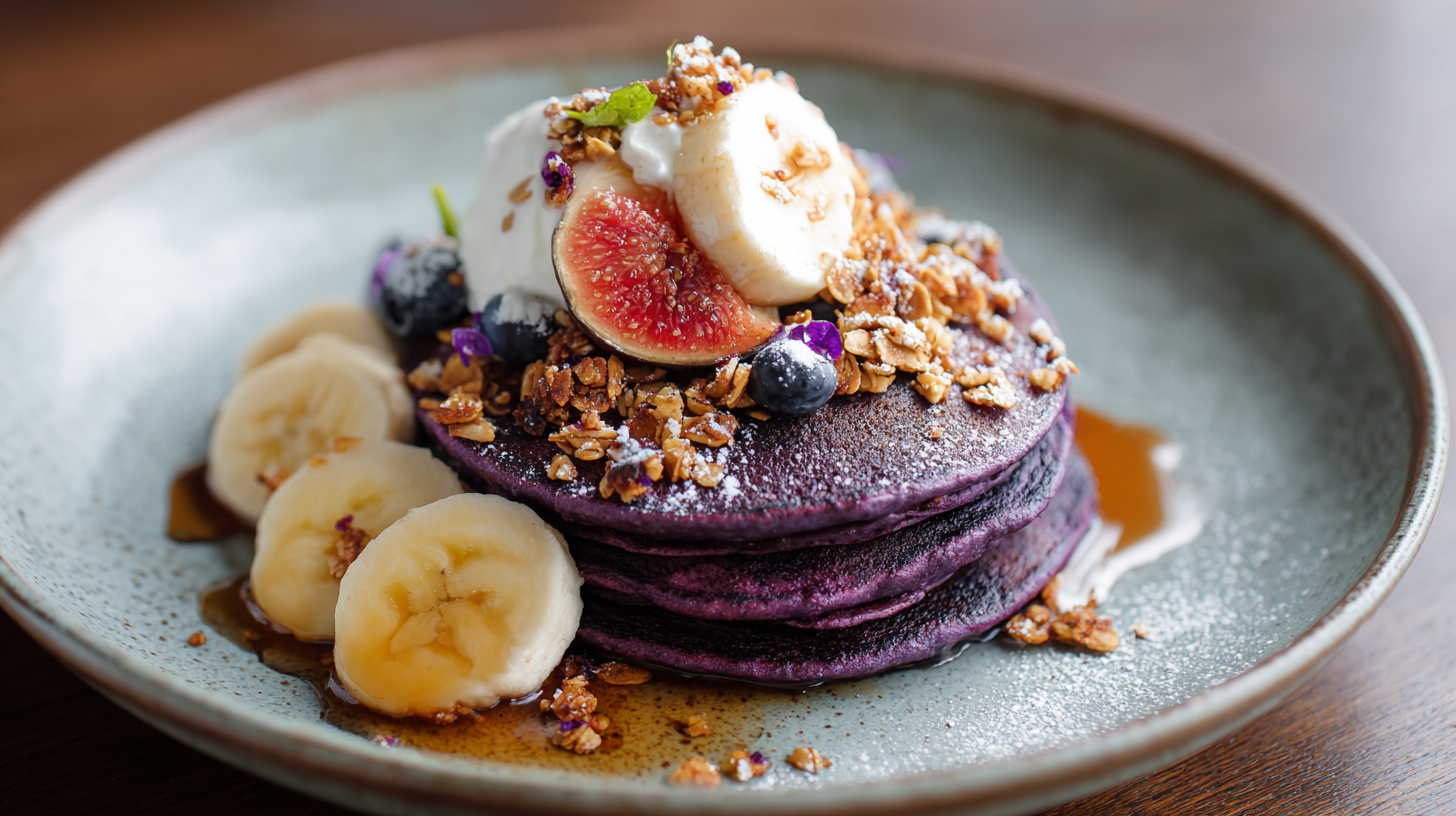
The dish itself, when built around acai pancakes (the most reliable acai format for cafe service), supports a strong sell price. Acai pancakes with banana, berries, coconut yoghurt, granola and maple syrup justifies $22 to $26 on a brunch menu in any major Australian city. At that price point, the dish runs at 30 to 35 percent food cost. Inside the standard target band.
Compare this to a smashed avocado toast at $18 with a 28 percent food cost. The avocado dish has a slightly better margin per dollar of revenue. The acai dish has higher absolute margin per plate ($14 to $16 versus $13 on the avocado) and a more differentiated menu position. Across a service of 30 brunches, the acai contribution adds up.
Acai bowls (acai puree blended with banana and frozen fruit, topped with granola) carry a slightly worse food cost than acai pancakes because the puree is the dominant ingredient. Pancakes use a fraction of the puree and dilute the cost across cheaper batter ingredients. For cafes wanting to put acai on the menu, pancakes are the more commercially-friendly format.
Do not lean on the wellness framing
The version of acai pancakes that sells well now is the one that does not describe itself as a wellness dish. The market has moved past that framing. The dish reads more credibly as a flavour-forward brunch option that happens to be vegetarian and dairy-free.
The menu description should be honest about what is on the plate. "Acai pancakes with banana, mixed berries, coconut yoghurt, apple-cinnamon granola and maple syrup. Vegetarian and dairy-free." That is the entire description. No "superfood." No "powered by." No "guilt-free." Customers who want this dish will recognise it from the description. Customers who do not want it will not be persuaded by adjectives.
The execution itself is straightforward. The batter takes a standard pancake recipe and replaces some of the milk with thawed acai puree. The result is a deep purple batter that cooks into golden-brown pancakes with a subtle berry note. The toppings carry most of the flavour and visual interest.
Three small things that decide the dish
The acai must be properly thawed. Frozen sachets straight into the batter give cold spots and uneven colour. Thaw in the fridge overnight or in a sealed bag in cool water for an hour. The puree should be smooth and pourable.
Rest the batter. Fifteen to thirty minutes under refrigeration after mixing. The flour hydrates, the gluten relaxes, and the resulting pancakes have a more tender lift. Skipped batter rest is the most common cause of dense, tough pancakes.
Keep frozen berries frozen until plating. Mixed berries thawed in advance bleed pink-purple juice into the coconut yoghurt and turn the dish into a colour mess. Berries scattered straight from the freezer onto the warm pancakes look clean and stay distinct.
One dish, considered choice
The case for acai on a cafe menu is not about chasing a trend that has already had its peak. It is about offering one genuinely good dairy-free, fruit-forward, premium-priced brunch option that customers in a specific demographic actively look for and pay well for. The economics work. The execution is repeatable. The differentiation on the menu is real.
One dish, executed properly, with a description that does not lean on the wellness cliche. That is the move. Cafes that chased acai in 2018 have mostly moved on. Cafes that have stayed with it have something quietly profitable on their menu.