
The base reveals whether the kitchen has patience
Arancini starts with risotto. Real risotto, made the slow way: hot stock added gradually to toasted rice, stirred constantly until the grain releases its starch and the dish becomes thick and cohesive. Twenty-five minutes of attention. No shortcuts.
You can taste in the finished arancini whether the risotto was made properly. Risotto cooked too fast on too high a heat with stock dumped in all at once produces rice that has not bound. The arancini falls apart when cut. Risotto made with care produces rice that holds its form, has a slight chew at the centre, and tastes of the stock it was cooked in.
This is the first test. A kitchen that cuts corners on the risotto is a kitchen that cuts corners elsewhere.
The form reveals whether the kitchen plans ahead
Cooked risotto cannot be formed into arancini straight from the pot. It is too soft, too warm, and will not hold structure. The risotto has to be spread thin on a tray, refrigerated until completely cold, and then formed into balls. The chilling step takes a minimum of two hours and is best done overnight.
A kitchen that has thought about its arancini service has the risotto chilled and ready before service starts. A kitchen that has not is the kitchen where you will see arancini on the menu but be told it is not available today. That kitchen has lost the dish before the first customer arrived.
The crumb reveals whether the kitchen takes care
Forming an arancini is a deliberate act. A portion of cold risotto pressed into the palm. An indentation made in the centre. The filling spooned in. The risotto sealed back over the filling, smoothed into a sphere with no gaps.
The seal is the test. If the rice does not fully enclose the filling, hot oil finds the gap during frying, the cheese explodes out, and the arancini either bursts open in the fryer or arrives at the pass with a crater on one side. A clean seal takes ten seconds of attention per arancini. A rushed seal takes five seconds and breaks the dish.
Crumbing follows the seal: light dust of flour, dip in beaten egg, even coat of breadcrumbs. Each layer matters. Skip the flour and the egg slides off. Skip the egg and the breadcrumbs do not stick. Skimp on the breadcrumbs and the rice is exposed to the oil.
Some cafes double-crumb their arancini (flour, egg, breadcrumbs, egg again, breadcrumbs again) for a thicker crust. The result is a more dramatic crunch and better insulation against the fryer. The trade-off is a higher labour cost per arancini and slightly more oil absorption. For high-volume cafe service, single-crumb is usually the right call. For a more premium positioning, double-crumb earns its keep.
The temperature reveals whether the kitchen has discipline
Arancini fry at 180 degrees Celsius. Not 170. Not 190. The window is narrow.
Below 170 and the crumb absorbs oil rather than crisping. The arancini comes out heavy, greasy, and pale. The customer notices immediately. Above 190 and the outside browns before the inside warms through. The arancini looks done from the outside but the cheese has not melted and the centre is cold. The customer notices on the second bite.
The kitchen with a frying thermometer and a temperature-controlled fryer wins this test by default. The kitchen eyeballing oil temperature off a saucepan loses it on the third arancini of the service. Discipline at the fryer is the difference between a dish that performs and a dish that disappoints.
Three to four minutes is the right fry time. Long enough to crisp the crumb, melt the cheese, and warm the centre. Short enough that the rice does not start absorbing oil. Hold the timer.
What the cheese pull tells you
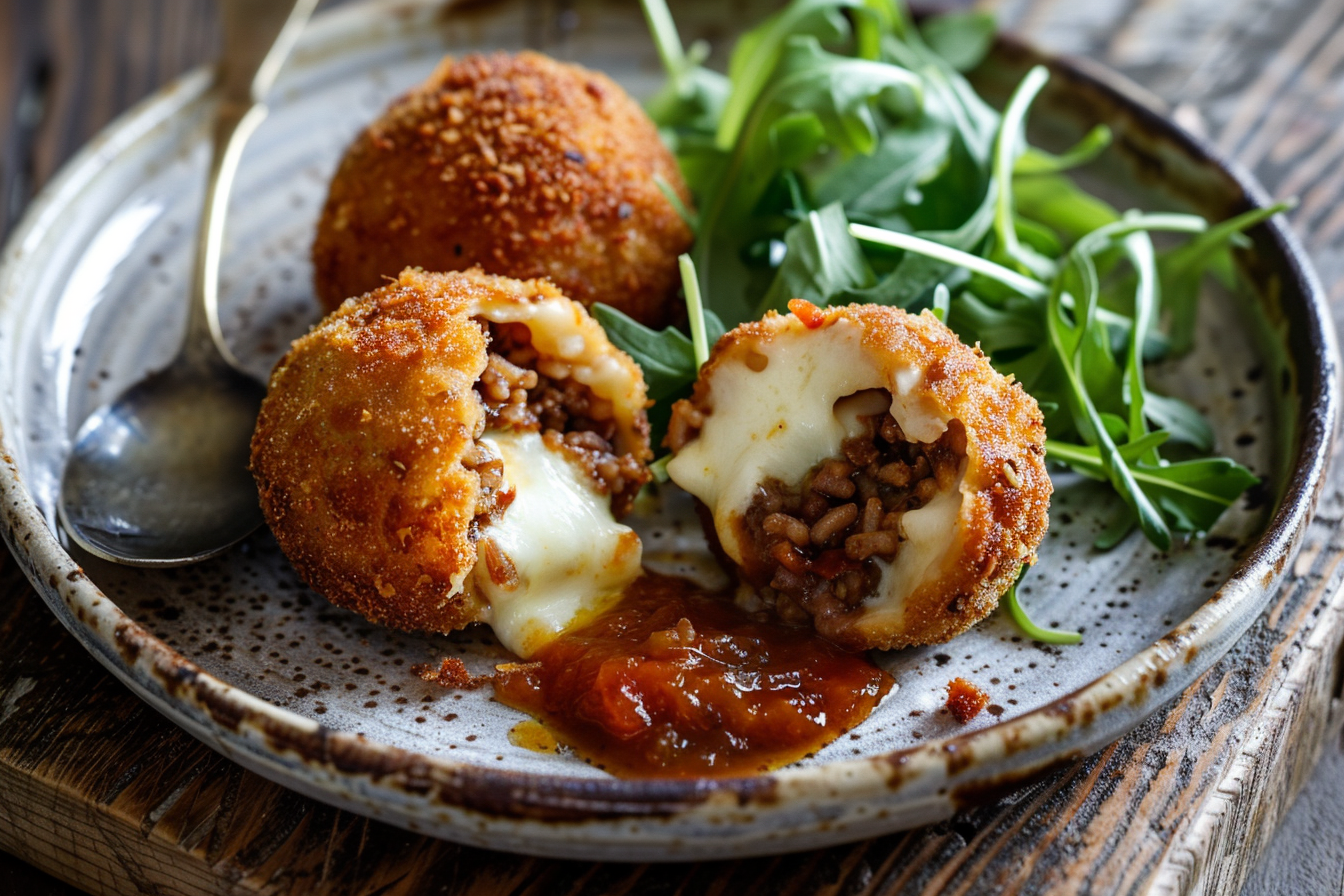
The customer cuts the first arancini open. If the kitchen has done its job, the cheese pulls. Stretches in two long strands between the two halves. The rice holds its form. The filling is hot and visible. The crumb stays attached to the rice rather than falling away.
This is the moment the dish either lands or fails. Everything in the four tests above leads to it. A kitchen that has executed each step well delivers a dish that performs in front of the customer in a way few other dishes do. A kitchen that has skipped a step delivers a dish that quietly disappoints.
The arancini test is not really about arancini. It is about whether the kitchen plans, prepares, and executes with care. Order the arancini at a new cafe and you learn most of what you need to know about the cooks behind the pass before the next plate arrives.