
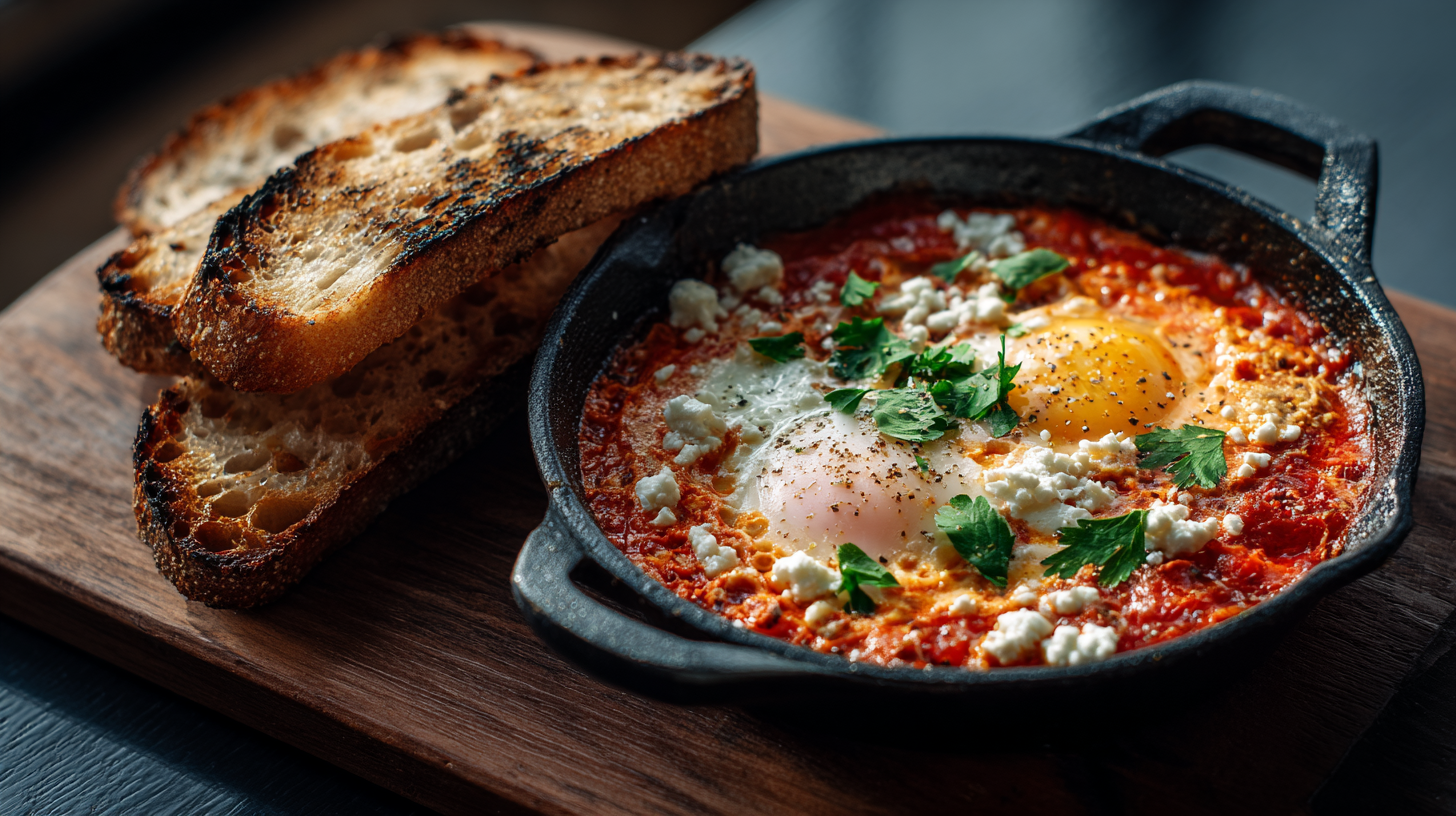
The dish that anchors a brunch menu
A great brunch menu is built around three or four dishes that pull customers in by name. The Big Breakfast is one. Eggs benedict is another. Avocado on toast is the third in most rooms. The fourth slot is the one that defines the cafe, the dish a regular orders without looking at the menu, the dish someone mentions when a friend asks where to go for brunch on Sunday. Shakshuka has earned that fourth slot in a lot of Australian rooms, and the reasons it has are worth taking seriously.
The dish travels well across the Australian customer base. It is vegetarian without apologising for it. It is halal. It is dramatic on the plate, with the bubbling sauce in a small pan and the steam rising off the eggs as it lands on the table. It is generous in size and it is forgiving of small variation in execution. And the sauce, which is the part that earns the dish its character, is a batch item that can be made on a quiet day and held cold for three days of service.
The sauce, in batch
The sauce is the dish. Get the sauce right and the rest is mechanical. The method is straightforward and the work is mostly unattended.
Olive oil goes into a large heavy-based pot over medium heat, with brown onion and red capsicum sweating slowly together for around eight to ten minutes until they soften and lightly caramelise. The aromatics matter at this stage. The onion should sweeten and the capsicum should give up its body. Garlic goes in for thirty seconds, just long enough to bloom. Then the dry spices: smoked paprika, ground cumin, ground coriander, a small hit of chilli flakes. Stir for a minute to release the aromas, with the pot off direct heat if needed to prevent the spices burning.
Crushed tinned tomatoes go in next, with a small amount of brown sugar to balance the tomato acidity. The pot comes up to a gentle boil and then drops back to a low simmer for twenty-five to thirty minutes, until the sauce is thick and rich and the colour has deepened from bright red to a deeper rust. Salt and pepper to finish, and the sauce is ready.
For an eight-portion batch, the yield is around 1,940ml, which divides cleanly into eight individual 240ml portions. Cool the sauce within thirty minutes (spread thin on a tray), portion into labelled 250ml containers, refrigerate. The sauce is at peak flavour for forty-eight hours, with the smoked paprika notes fading slowly past that. Three days is the food-safety hold.
The eight-minute plate
To order, one 240ml portion of cold sauce goes into an eighteen centimetre oven-safe pan and onto the stove. A minute or two brings the sauce up to a gentle simmer. Two wells go into the surface with the back of a spoon.
This next step matters. Two eggs are cracked one at a time into a small ramekin (which catches any shell, and lets the kitchen reject a bad egg without losing the whole portion), then slid from the ramekin into the wells. The pan stays on the stove for one or two more minutes until the whites just begin to set around the edges. This pre-set is the small piece of technique that prevents runny whites at the end of the bake.
The pan transfers to a 190 degree fan-forced oven for six to eight minutes, until the whites are fully set and the yolks remain soft. Bread goes into the toaster in parallel. The pan comes out (with oven mitts, since the handle gets very hot), gets a scatter of crumbled feta, a sprinkle of fresh chopped parsley, and a small drizzle of olive oil reserved from the batch. Toast plates beside the pan. The dish goes to the pass.
Total time from order to plate, around eight minutes. Most of it is the bake, which is unattended, so the kitchen runs other dishes alongside. A pan of shakshuka does not slow the rest of the service.
A generous plate at a clean food cost
Eight portions of shakshuka cost around twenty-eight to thirty-six dollars in food. Per portion, that is around four dollars: feta and eggs and tomato are doing most of the lifting. On a well-judged brunch menu, the dish sells for twenty-two to twenty-six dollars. Food cost percentage sits around 16 to 18, which is excellent for a substantial brunch dish, and the margin gives the menu room to invest elsewhere.
The dish also holds a particular shape on the menu. It sits between the eggs benedict at the top of the price list and the avocado on toast at the bottom, and it gives the customer a third option that is neither classic-cafe nor health-cafe. Customers who order shakshuka tend to bring a friend who orders something else from the same menu, which is the kind of small effect that adds up across a Saturday service.
The dish to anchor a brunch menu around
Shakshuka is one of the most generous dishes a cafe can serve at brunch. The sauce has been made in advance and is ready to portion. The pan goes from cold sauce to plated dish in eight minutes. The customer gets a small bubbling pan with two soft eggs and crumbled feta and the smell of smoked paprika rising off it, and the kitchen has run a high-margin dish without slowing anything else down.
It belongs on more brunch menus than it currently sits on, and the cafes serving it well are quietly building a following around the dish. Make the sauce on Wednesday. Hold it through the weekend. Crack two eggs into a hot pan and bake. Repeat until the regulars start asking for it by name.
The best brunch dishes are the ones that look like a small piece of theatre on the table. A cast-iron pan, a bubbling sauce, two soft eggs, and the smell of smoked paprika is exactly that.