
The vegan customer is not a problem to be solved
Most cafe menus still treat the vegan customer as a problem to be solved. A box ticked on the menu, a dish modified down from a non-vegan version, the avocado on toast with the egg removed and a small price reduction. The cafes that approach vegan as an audience to design for, rather than a constraint to work around, find a quietly profitable customer who is delighted to pay full price for a breakfast that does not require any negotiation at the counter.
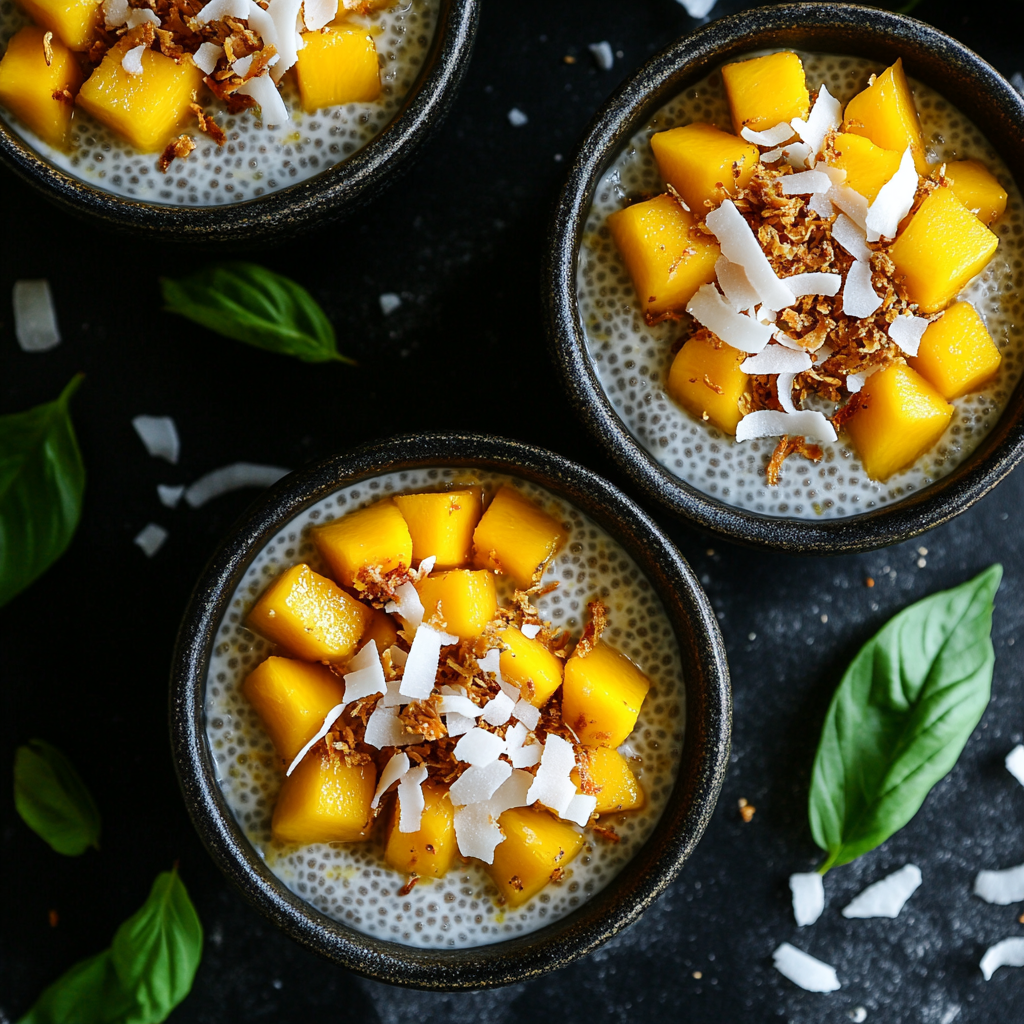
A layered chia pudding pot, made with coconut milk, coconut yoghurt, fresh mango and toasted nuts, is one of the cleanest examples of that design move. The dish is vegan because it is built that way, not because dairy has been removed from a dairy version. It is dairy-free, gluten-free, prep-ahead, photogenic and substantial, and it sells in a clear glass to customers who are happy to pay between nine and twelve dollars for it at any time of day.
The base, in batch
The pudding base is a single-step prep. Chia seeds, coconut milk, a small amount of maple syrup, a few drops of vanilla extract and a pinch of salt go into a large container. Whisk vigorously for around a minute until the seeds are evenly distributed (any clumps will set as small lumps overnight). Rest for five minutes, whisk again to break up the early set, cover and refrigerate at least four hours, ideally overnight, until the base is fully set into a soft pudding consistency.
The chia-to-liquid ratio is the only variable that needs care. The classic ratio is 1:8 (one part chia to eight parts liquid by weight), which gives a firmer, almost spoonable pudding. The pourable cafe version uses a slightly wetter 1:9 ratio, which gives a softer texture that layers cleanly into a glass without holding awkward edges. A ten-portion batch comes to around 200g of chia and 1,800ml of coconut milk, with 60ml of maple syrup, 5ml of vanilla and 1g of salt to round it out. The yield is just over 2kg, which divides cleanly into ten 200g portions.
The toppings are simple. Mixed almonds and macadamias are toasted on a tray at 160 degrees fan-forced for eight to ten minutes until golden. Shredded coconut is toasted on a separate tray for three to five minutes (it burns much faster than the nuts and toasting them together produces burnt coconut or raw nuts, never both right). Both cool fully and hold sealed at room temperature for a week. Fresh mango is diced into one centimetre cubes daily and held refrigerated for up to twenty-four hours.
The thirty-second plate
The pot assembles to order in around thirty seconds. A clean glass vessel (around 400ml capacity, the layered visual is part of the dish) gets 200g of the chia base spooned in. 50g of coconut yoghurt goes on top of the base. 80g of fresh mango cubes go over the yoghurt. 20g of toasted nuts and 12g of toasted shredded coconut finish the top. A spoon goes alongside, and the pot leaves the kitchen.
The whole assembly is at the front-of-house end of the kitchen and can be done by a barista or a counter-staff member with no plating skill required. That is a structural advantage. The dish does not draw attention from the chef during a service rush. It also means a takeaway customer can be served the same dish in a sealed cup, with no quality difference between the eat-in version and the takeaway one.
Why this dish earns its tray
A single served pot costs around three and a half dollars in food, with the mango, the nuts and the coconut yoghurt doing most of the work. At a retail price of nine to twelve dollars, the food cost percentage sits between 30 and 40, which is workable but tight. The case for the dish on the menu is not built on margin alone. It is built on the audience.
The vegan and dairy-free customer is one of the most loyal demographics a cafe can serve. They have made a deliberate dietary choice, they have probably been refused a satisfying option at three other cafes that week, and they are generous with their recommendations. A cafe that runs one well-considered vegan breakfast dish gets that customer back every week, and brings the friends who eat dairy-free, gluten-free, or simply prefer a lighter breakfast.
The pot also signals something to the wider room. A cabinet with a layered glass of vegan chia pudding in it reads as a more thoughtful cabinet, even to customers who will never order it. The signal is small but it compounds over time. Cafes known for taking dietary requirements seriously become destination cafes for groups, and groups order more than individuals.
A confident vegan dish, built for the audience
The mistake with vegan dishes on a cafe menu is to build them as compromises. A confident vegan dish, designed from the start for the customer who wants it, is the move that earns the loyalty and the return visits. A layered chia pudding pot does that work cleanly, on a small footprint, with a prep schedule that any kitchen can run.
Blend the chia base on Sunday. Toast the nuts and coconut on Monday. Dice fresh mango daily. Assemble to order in thirty seconds. The vegan customers who have been waiting for a cafe that takes their breakfast seriously will find the cabinet, and they will keep coming back to it.
The dish is a small one. The audience it earns is not.