
Bruschetta has stopped being about tomato
The Australian cafe Bruschetta of 2008 was tomato, basil and balsamic on a slice of Turkish bread, served as a $14 starter. It ran its course. By the early 2010s it was a cliche, and in the years after it quietly dropped off most menus.
The new version keeps the format (toasted bread, topped, served as a small plate or light main) but drops the tomato rule. It uses whatever is in season and good. Beetroot slaw with goat's curd in autumn. Roasted pumpkin with whipped feta in winter. Stone fruit with burrata in summer. Charred broccolini with anchovy butter in spring.
Once it stopped being the tomato cliche, it became a way to show off the season. That's what makes it interesting again.
Sourdough has solved the structural problem
The Turkish bread behind the 2008 Bruschetta was wrong for the job. It was soft, thin and quick to go soggy under a wet topping, so the bread either fell apart on the first bite or arrived at the table already collapsed.
Sourdough fixes that. Toast a 1.5 to 2 centimetre slice of properly fermented sourdough until it's golden and firm outside and still tender inside, and it will carry a substantial topping. The crust holds. The crumb takes up a little oil without sponging up everything wet that touches it.
That one change, the right bread properly toasted, is most of what separates the new Bruschetta from the old. We don't think Australians have suddenly rediscovered Italian small plates. The bread underneath has caught up.
The garlic rub is the small move that lifts everything
A proper Bruschetta is rubbed with garlic. It's an easy step, and it's the one thing that separates Bruschetta from a slice of toast with toppings.
Cut a clove of fresh garlic in half. Rub the cut side gently across the hot toast. The toast works like fine sandpaper, so the garlic goes on as a faint coating (a hint, not a paste). Olive oil goes on straight after, then a pinch of salt.
It takes ten seconds. The best Italian kitchens have always done it, and Australian cafes are starting to bring it back. Write it into the prep ticket so it's never the step that gets dropped when the docket rail fills up.
The garlic rub also works on grilled bread for sandwiches, flatbreads for dips and toast for soft boiled eggs. It costs nothing, takes seconds and noticeably lifts the dish. Do it whenever toast is on the plate.
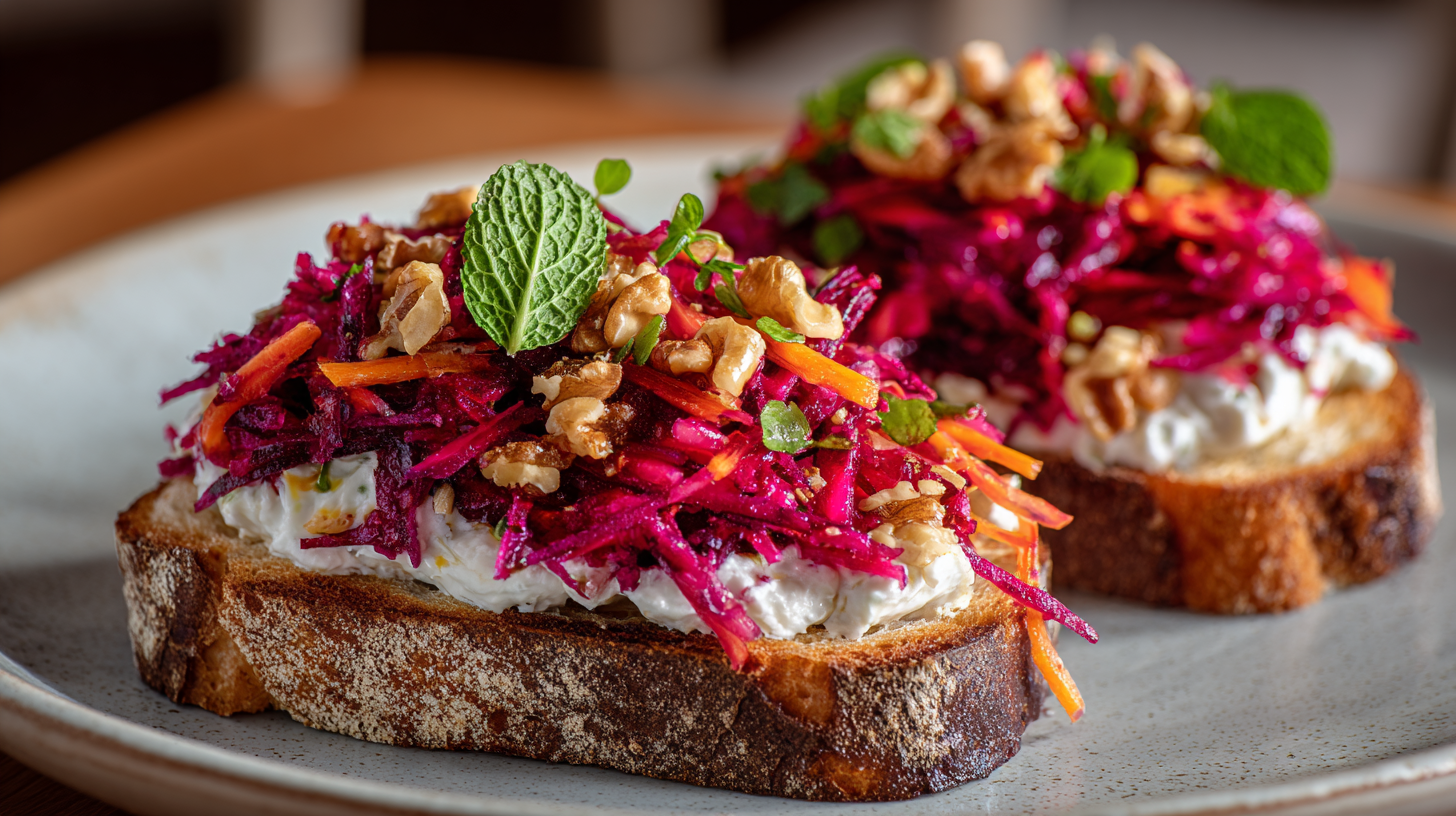
Beetroot slaw on whipped goat's curd
If you put one autumn Bruschetta on the menu, make it beetroot slaw on whipped goat's curd. It has everything the new Bruschetta needs.
Beetroot peaks in autumn, so you get it at its sweetest and most colourful. Shred it raw and dress it with a lemon vinaigrette and it has a crisp tang that plays off the soft, slightly sour goat's curd underneath. Toasted walnuts bring bitterness and crunch, and mint brightens it up. Warm toast, cool cheese, crisp slaw, crunchy nuts: every mouthful has contrast.
The prep is straightforward. Whip the goat's curd with olive oil, lemon zest, salt and pepper for one minute until it's light and spreadable. Shred the beetroot, carrot and red onion fine and store them separately, because you'll dress to order to keep the slaw crisp. Toast the walnuts and break them roughly by hand. Toast the sourdough and rub it with garlic.
The build at service: spread 60 grams of whipped goat's curd across two slices of warm toast. Combine 80g beetroot, 30g carrot and 15g red onion in a bowl, dress with 15ml vinaigrette and toss gently. Pile the slaw on the curd. Scatter walnuts. Drizzle with the remaining vinaigrette. Garnish with mint. Serve immediately.
One slice on the menu, deliberately seasonal
Nostalgia isn't the reason to put Bruschetta back on a cafe menu. The format (sturdy bread, rubbed with garlic, topped with whatever is in season) is one of the most flexible and honest things a cafe can serve. It works as a starter or a light main. It changes with the seasons without a menu reprint. And customers know what it is the moment they read it.
Put one Bruschetta on the menu, change it each season, and make it on thick, properly toasted sourdough with the garlic rub every time. It's a quietly excellent dish. Sometimes a dish falls out of fashion for the wrong reasons, and better bread and more honest toppings are enough to bring it back better than it was.